



Product Specification
|
Product name |
Graphene |
|
CAS NO |
1034343-98-0 |
|
ITEM NO |
M1034343980 |
|
Moisture Content |
≤0.5% |
|
Oxygen Content |
≤5.0% |
|
Electrical Conductivity |
≥10⁵ S/cm |
|
Ash Content |
≤0.1% |
|
BET Surface Area |
350–1500 m²/g |
|
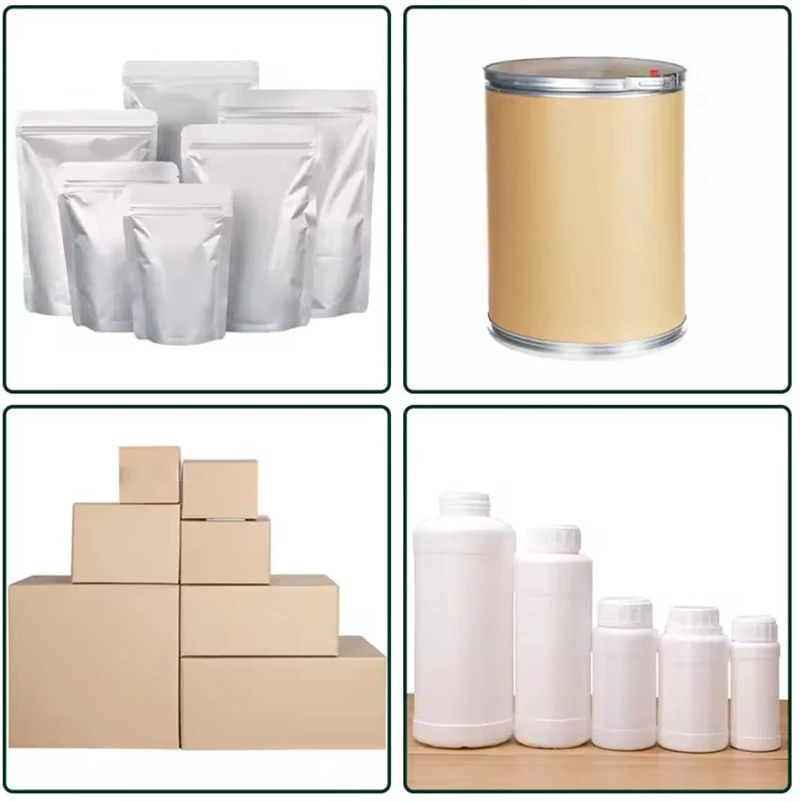
Package |
100g/1kg/25kg |
|
Delivery |
2-3days |
|
Storage |
Store at room temperature, keep dry and cool |
|
MSDS/COA |
connect us |

FAQ
What is the core principle of achieving "physical barrier" with graphene (CAS: 1034343-98-0)in anti-corrosion coatings?
The core principle of using graphene to achieve physical barrier in anti-corrosion coatings is based on its single-layer two-dimensional sheet structure. After the coating is formed, it forms an interconnected and dense continuous "sheet labyrinth barrier" in space. It blocks the penetration of corrosive media such as water, oxygen, and chloride ions to the metal substrate from three dimensions: spatial barrier, path extension, and defect sealing. At the same time, its own chemical stability can prevent the material from participating in the corrosion reaction, ultimately significantly improving the anti-corrosion performance of the coating.
What is the core reaction principle of modifying graphene(CAS: 1034343-98-0) with silane coupling agents?
The core of modifying graphene with silane coupling agents can be summarized as follows: Using the dual functional groups of silane coupling agents as a bridge, stable Si-O-C covalent bonds are formed at the defect sites of graphene, achieving the targeted grafting of silane coupling agents; ultimately, through the outer organic functional ends, the dispersion of graphene is improved simultaneously and the bonding force between the matrix and the interface is enhanced. Moreover, since only the defect sites are modified, the sp² structure and inherent properties of graphene are maximally retained, making it an efficient method that balances the modification effect and performance retention.
How does graphene-based thermal conductive composite material solve the problem of interface thermal resistance between the material and the chip surface?
By filling the gaps and bridging phonons with thermal interface materials (TIM), and enhancing the contact area through process optimization as an auxiliary measure, and based on the structural design of the composite material to match phonon transmission / CTE, the three elements work together to significantly reduce the interface thermal resistance.
Why can graphene(CAS: 1034343-98-0), as a filler in rubber composite materials, significantly enhance the anti-aging and anti-tearing properties of rubber with a low addition amount?
Based on the structure of two-dimensional ultra-large layers, ultra-high mechanical properties, and high specific surface area, a low addition amount can form a continuous layer network in the rubber matrix; for anti-tearing, efficient reinforcement is achieved through crack deflection, pinning, bridging + strong interface stress transfer; for anti-aging, multi-effect protection is realized through the physical barrier of two-dimensional dense layers (oxygen / ultraviolet / ozone) + free radical capture at defect sites.
Is the phonon transmission of graphene(CAS: 1034343-98-0) the core reason for its extremely high thermal conductivity?
The extremely high thermal conductivity of perfect single-layer graphene stems from the long-range, low-resistance transmission of phonons along the plane direction (micrometer-scale average free path); defects act as scattering centers for phonons, directly shortening the average free path of phonons through geometric/chemical scattering. An increase in the number of layers introduces interlayer phonon scattering and mode coupling, which disrupts the efficient transmission of phonons within the plane, fundamentally reducing the efficiency of phonon transmission. Moreover, the combined effect doubles the scattering effect.
Hot Tags: cas no:1034343-98-0 graphene, China cas no:1034343-98-0 graphene manufacturers, suppliers


![CAS NO:12112-67-3 [Ir(cod)Cl]2/Chloro(1,5-cyclooctadiene)iridium(I) Dimer](/uploads/45180/small/cas-no-12112-67-3-ir-cod-cl-2-chloro-1-52026020307293458ab2.jpg?size=170x0)
