


Product Specification
|
Product name |
6PPD-quinone/2-((4-Methylpentan-2-yl)amino)-5-(phenylamino)cyclohexa-2,5-diene-1,4-dione |
|
CAS NO |
2754428-18-5 |
|
ITEM NO |
M2754428185 |
|
Boiling point |
442.2±45.0 °C |
|
Acidity coefficient (pKa) |
0.61±0.20 |
|
Density |
1.12±0.1 g/cm3 |
|
Package |
100g/1kg/25kg |
|
Delivery |
2-3days |
|
Storage |
-20°C |
|
MSDS/COA |
connect us |

FAQ
What aspect does the core environmental hazard of 6PPD-quinone(CAS:2754428-18-5) mainly manifest in?
The core environmental hazard of 6PPD-quinone is that it has extremely strong acute aquatic toxicity to salmon species. Moreover, it is prone to accumulate in the environment and is difficult to degrade, which directly causes large-scale acute deaths of salmon species and damages the aquatic ecosystem. Among them, the toxicity to the silver chum salmon is particularly significant (with an LC₅₀ as low as 95 ng/L), and even extremely low concentrations can cause fatal harm.
The main environmental impacts and biological toxicity of 6PPD-quinone?
1.High acute toxicity to salmonid fish species
2.Toxicity mechanism
3.Environmental migration and accumulation
4.Effects on humans and terrestrial organisms
The core generation pathway of 6PPD-quinone?
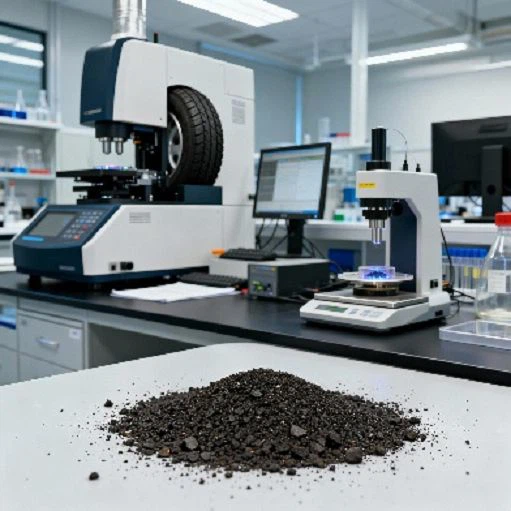
There is no industrial artificial synthesis. It is only a secondary degradation product of 6PPD. It is mainly generated during the processing, use, aging, and disposal of rubber products containing 6PPD. The core oxidation conditions are ozone, oxygen, ultraviolet light, and heat. Among them, tire wear is the main source of generation (accounting for more than 90% of the total 6PPD - quinone in the environment).
6PPD - Quinone is prone to photodegradation under natural light or ultraviolet light, but in dark environments such as water bottom sediments, its half-life can reach several weeks. What is the core reason for this difference in stability?
1.The molecular structure determines its strong photochemical activity, and it is prone to undergo radical-type photolysis under light irradiation.
2. The dark environment of water body sediments provides dual protection, completely blocking photolysis and reducing the rate of chemical degradation.
From the perspective of molecular structure, what are the key groups that determine the solubility characteristics of 6PPD-quinone?
This is the result of the combined action of the lipophilic hydrophobic groups and the hydrophilic polar groups in its molecules. Moreover, the solubility in alkaline aqueous solutions is also caused by the dissociation / complexation of the active chemical groups of the quinone group.
Hot Tags: cas no:2754428-18-5 6ppd-quinone/2-((4-methylpentan-2-yl)amino)-5-(phenylamino)cyclohexa-2,5-diene-1,4-dione, China cas no:2754428-18-5 6ppd-quinone/2-((4-methylpentan-2-yl)amino)-5-(phenylamino)cyclohexa-2,5-diene-1,4-dione manufacturers, suppliers


